
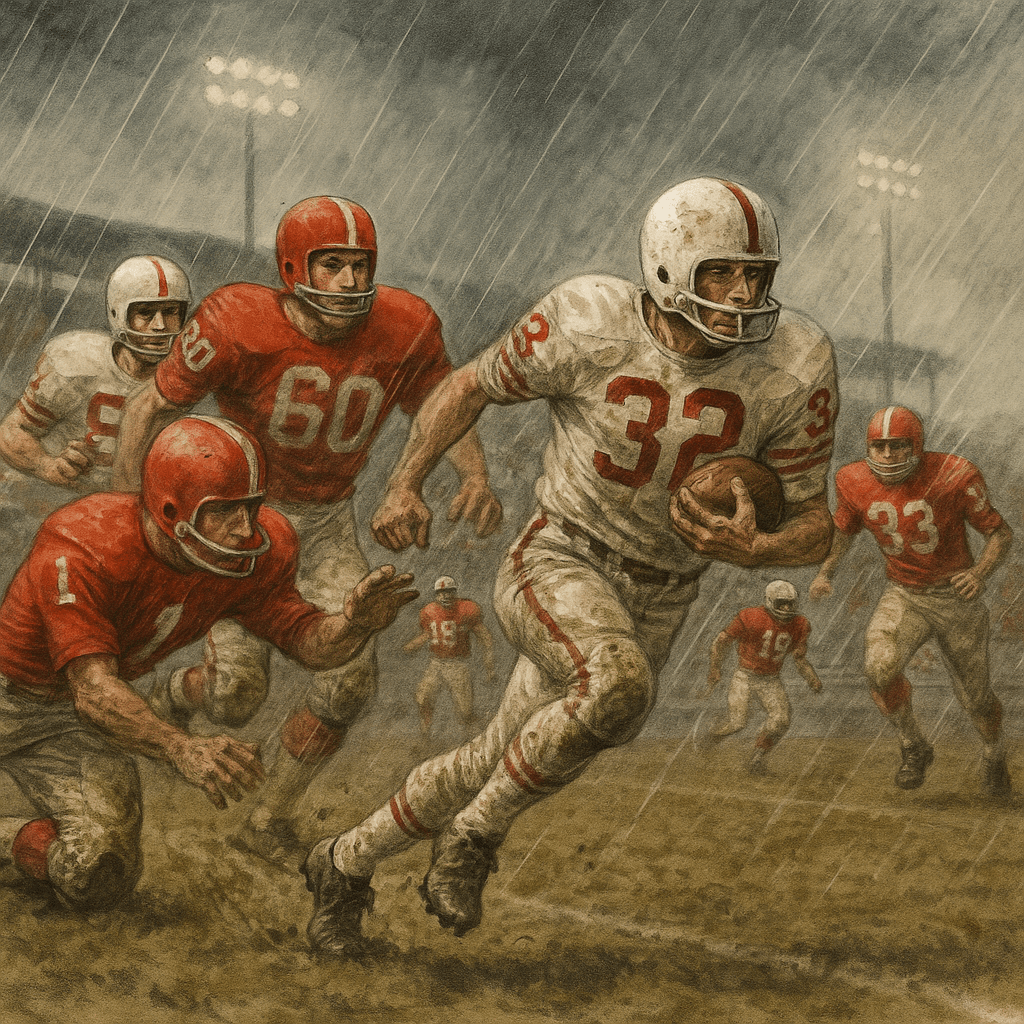
North Shore’s 1965 Win Over Memorial—and the Shift of Texas Football Power
By LONNIE KING | © 2025, Big Daddy’s Texas Sports
There’s something poetic about stumbling across an old newspaper clipping that reports a high school football game like it was the most important story of the week. Because, in Texas—then and now—it often was.
I came across such a headline while digging through the archives in preparation for this season’s prep coverage. From the November 6, 1965 edition of the Houston Chronicle:
“Two Long North Shore Runs Upset Memorial, 13-0.”
I was just four years old then, oblivious to the muddy drama playing out only a few miles from where I lived with my family in Langwood, on Houston’s northwest side. The game was played at Reggie Grob Stadium, on Westview Drive in Spring Branch—a place that seemed like a palace to a little kid back then.
Grob Stadium is long gone now, another relic of a Houston that’s disappeared, neighborhood by neighborhood. But in its day, it was a stage worthy of the kind of Friday night theatre that made grown men and boys alike dream a little bigger.
I can almost picture it—folks settling in with their Saturday afternoon edition of the Chronicle, coffee cup or iced tea nearby, reading about the previous night’s rainy exploits before dinner. The Post was the morning paper in those days, but the Chronicle gave you something to chew on as the weekend settled in.
Newspapers are different now, if not quite extinct. High school football coverage in Texas is no longer something you wait a day to read about—it’s devoured in the minutes after the final whistle, served up by whichever app or social feed hits your phone first.
No one waits 24 hours anymore to hear about the fate of the local “schoolboy elevens,” as the sportswriters of the 1960s so fondly put it.
Still, there was something about that muddy, rainy Friday night that deserved the ink it got. An upset no one saw coming. And a symbolic turning point, though nobody realized it yet.
The Shadow of Spring Branch
In the mid-60s, Spring Branch ISD was the beating heart of Houston-area football. The original Spring Branch High School was a state powerhouse, fresh off the era of Chris Gilbert—the running back phenom who graduated in ’65 and was already making his mark at the University of Texas.
Memorial High School and North Shore High School were still operating in the Bears’ shadow, trying to forge their own path in a region where Spring Branch had set the standard. But in the fall of 1965, it looked like Memorial was ready to claim the throne.
The Mustangs entered their November 5 matchup with North Shore sporting a spotless 7-0 record. Their resume included impressive wins over a slate of teams from across Texas: Corpus Christi Carroll, McAllen, Lufkin, and South Houston. The storyline was simple—Memorial was the next big thing in District 10-4A.
North Shore? They were just an upstart, still trying to find themselves in only their third varsity season. Progress was evident—they’d won two games in their inaugural season, bumped that up to five wins in 1964, but in 1965, they remained a program without a clear identity.
Sure, they had notched a respectable 13-13 tie with a tough La Marque squad earlier that season, but they’d already suffered defeats to both Spring Branch and South Houston.
There was little reason to believe North Shore could disrupt Memorial’s perfect season, especially on a soggy, rain-drenched field.
Yet, they did exactly that—blanking Memorial 13-0 in a game dominated by defense and special teams. Neither offense could find the end zone, bogged down by the weather and the mud.
But North Shore had a young man named Dickie Phillips.
Phillips, the Mustangs’ quarterback, made his biggest impact not with his arm or legs on offense, but with two electrifying punt returns. In the first quarter, he fielded a kick and raced 90 yards through the muck for the opening score—then booted the extra point himself.
As the game wore on and both offenses remained stymied, Phillips struck again, returning another punt 63 yards in the fourth quarter to seal the win.
The Houston Chronicle the next day called it “a stunning upset victory” that “knock(ed) Memorial from the ranks of the state’s AAAA unbeaten teams.”
I doubt even the players and coaches that night, that season, or even that decade could’ve envisioned what North Shore would ultimately become.
Who knew that this east side Houston neighborhood would one day produce NFL talent like Andre Gurode, Cory Redding, Earl Mitchell, and Willie Gaston—who has since returned to his alma mater as head coach? Gaston now carries the torch passed down by program legends David Aymond and Jon Kay, continuing a legacy of excellence that would’ve been unimaginable in 1965.
That muddy night against Memorial wasn’t just a big win. It was, unknowingly, the first chapter of a much larger story—one that still isn’t finished.
Time Shifts the Balance
To avoid being a revisionist with the local football history, I must state that North Shore’s football dominance would not become evident for another three decades after 1965. They began an annual ritual of making it into the UIL football playoffs in 1994.
And Spring Branch ISD would still be a dominant force in the state into the early 1980s, with Stratford High School (which did not yet exist in 1965) producing a state champion in 1978, as well as NFL talent like Craig James, Chuck Thomas, David Klingler and Andrew Luck.
But today, 60 years later, Spring Branch High School is merely a memory—closed for over 45 years, a casualty of neighborhood stability.
Families stayed put after their kids graduated, the neighborhood population aged, birth rates declined, and the school was shuttered. Memorial still stands, but it’s a far cry from its football heyday.
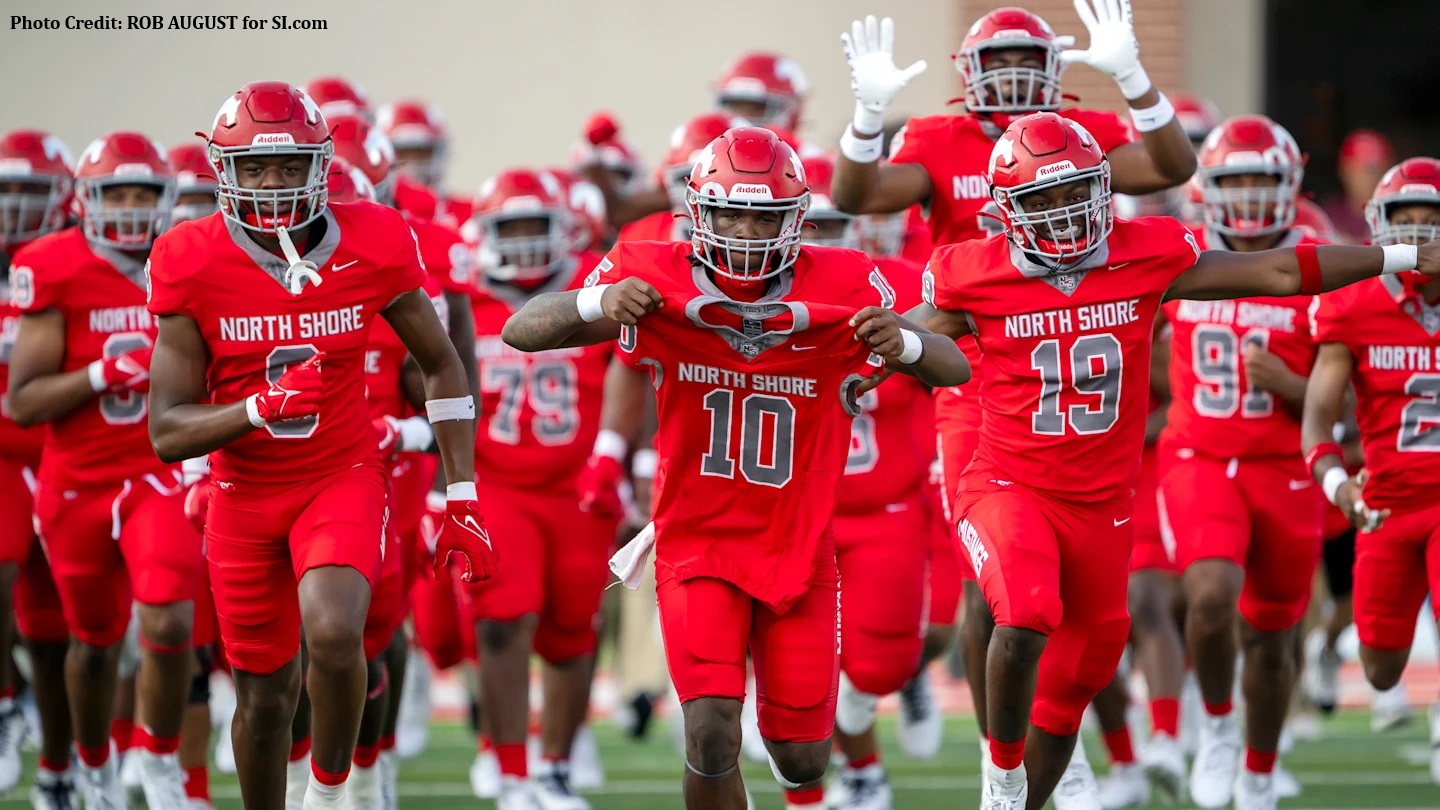
North Shore? They’ve become the bully on the block. A state and national power, known for dominating the Class 6A landscape and producing jaw-dropping talent year after year.
In 1965, they were the underdogs. Today, they’re the measuring stick.
What About the Schools That Never Get There?
Still, for every North Shore, there’s a dozen programs that never rise. Schools that always seem to be “rebuilding,” caught in cycles of changing demographics, underfunding, or simply bad luck. In a state that reveres Friday night glory, those schools remind us that success is as much about timing, location, and leadership as it is about grit.
Sometimes it’s not just players or coaches. Sometimes the neighborhood itself changes. Kids grow up, families move out—or they don’t. Enrollment shifts, and suddenly the talent pool dries up. Some schools close. Some play on, but fade quietly into mediocrity.
The Big Takeaway?
Maybe that’s the BIG point here. I wasn’t quite sure when I started writing this, but I think I’ve landed on it, as obvious as it may be: Sports is a microcosm of life.
The world is always changing. Things that feel insurmountable today? They can disappear with time. Power shifts. Dynasties fade. Sometimes obstacles completely go away. New stories emerge.
But you gotta have a bit of good fortune too.
At the same time, it’s also a reminder that even the big ideas, the big programs, the big deals we celebrate today—every one of them had to get their start somewhere.
Sometimes, all it takes is a muddy field, a couple of punt returns, and a Friday night almost forgotten until a wanderer stumbled onto it.
Legacies Written in Mud
That 13-0 North Shore win in 1965 lives on in faded newsprint and in the memories of those who were there, although that number has to be dwindling significantly in 2025.
But it’s also a chapter in a bigger story: the slow, often invisible shift of football power from one side of Houston to another.
Some games are about standings. Some, like that rainy November night, are about legacy—even if you don’t know it yet.

Leave a comment