

By LONNIE KING | © 2025 Big Daddy’s Texas Sports
They called it the Eighth Wonder of the World—and for good reason. The Houston Astrodome wasn’t just a marvel of engineering when it opened in 1965. It was a symbol of Houston’s boldness, vision, and willingness to do what no other city had done.
Domed, air-conditioned, and futuristic, the Astrodome became a stage for sports legends, political conventions, and pop culture icons.
But now, 60 years later, the Dome sits empty—silent, sealed off, and surrounded by debate. Its future remains uncertain. And many Houstonians, myself included, are left wondering:
What’s going to happen to the Astrodome—and why hasn’t it happened already?
A History of Proposals, Pushback, and Political Paralysis
Over the past 15 years, we’ve seen:
- A failed $217 million bond referendum in 2013
- A stalled $105 million renovation plan in 2018
- A new $1+ billion proposal from the Astrodome Conservancy to turn it into a mixed-use facility with retail, offices, and event space
- Growing frustration from stakeholders like the Houston Rodeo and Texans, who view it as a liability more than a landmark
Meanwhile, the cost of doing nothing keeps climbing.
The Demolition Dilemma
Ironically, tearing it down wouldn’t be cheap either—demolition could cost over $100 million. And because it was declared a Texas State Historical Landmark in 2018, demolition isn’t a simple matter of bringing in the wrecking ball.
It’s stuck in a weird zone: too expensive to fix, too historic to destroy.
Politics, Priorities, and Public Will
Former Harris County Judge Ed Emmett—a Republican I disagreed with on many issues but admired for his leadership here—fought hard to save the Dome. He saw it not as a burden, but a paid-for public asset with potential to serve the community.
But leadership has changed, and momentum has waned.
The Astrodome Conservancy’s Vision Plan has proposed a bold reimagining of the space: transforming the Dome into a climate-controlled, multi-use facility with a central events floor surrounded by retail, dining, and office space.
It would connect directly to NRG Stadium and potentially house a museum or cultural center honoring Houston’s sports and civic legacy.
The estimated price tag exceeds $1 billion, but advocates point to a projected $1.5 billion economic impact over 30 years and suggest funding could come from public-private partnerships, historic tax credits, and investment incentives.
The Houston Texans and the Houston Livestock Show & Rodeo—who essentially control NRG Park’s future—have been lukewarm or openly resistant to the latest Conservancy plan. That lack of alignment has stalled progress.
And let’s be honest: most voters aren’t itching to spend hundreds of millions on a building they can’t even enter.
Why I Still Care
I understand why people might scoff at the idea of spending more money to save a crumbling stadium. But for me, it’s personal.
When I was a kid, the Astrodome wasn’t just a ballpark—it was everything. My dad and grandfather—both pastors—had access to special clergy passes that let them attend any game for a nominal fee and bring a guest. That meant my brother and I spent our summers tagging along to dozens of games, sitting out in the Pavilion section beyond the outfield fence.
I still remember the awe of it all. Pulling into that giant parking lot. Staring up at the Dome’s massive frame. Passing through the turnstiles and being greeted by the vibrant, almost otherworldly green of the Astroturf.
The Dome felt like something sacred.
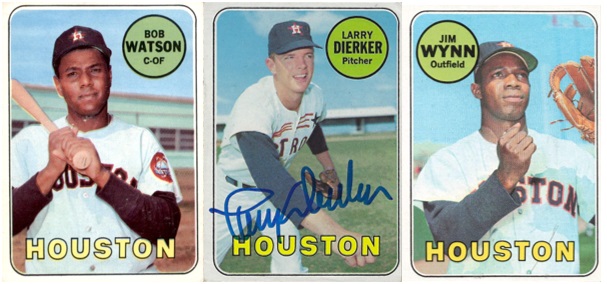
I thought Larry Dierker, Fred Gladding, Jesus Alou, Norm Miller, Doug Rader, and Bob Watson were the stars of the National League. And to me, they were.
But I also got to see the real giants of the game—Willie Mays. Roberto Clemente. Pete Rose. Players I’d read about in box scores or seen in grainy black-and-white TV clips. And there they were, just a few yards away, playing beneath that iconic roof.
Those memories shaped how I viewed the Astrodome—not just as a stadium, but as a landmark of possibility and magic. And that’s why I’ve carried a love for that “sacred ground” into adulthood, and why I’ve remained committed to seeing it preserved and reimagined—not just remembered.
Still Worth Fighting For? I Think So
I understand fiscal responsibility. I understand political realities. But I also believe we have to think long-term.
If Houston can find a way to preserve the Dome without mortgaging its future, we should. It’s an investment in civic pride, economic potential, and cultural heritage. We don’t get many chances to revive an icon. We shouldn’t waste this one.
The Window May Be Closing
A new county-commissioned study is expected this summer. It will compare costs and feasibility for demolition vs. restoration. That report may finally force a decision.
My hope is that decision won’t be made out of frustration or fatigue—but out of vision and responsibility. Because in a city that prides itself on innovation and reinvention, letting the Astrodome rot away in silence just doesn’t feel like the Houston way.

Leave a comment