
By LONNIE KING | © 2025, Big Daddy’s Texas Sports
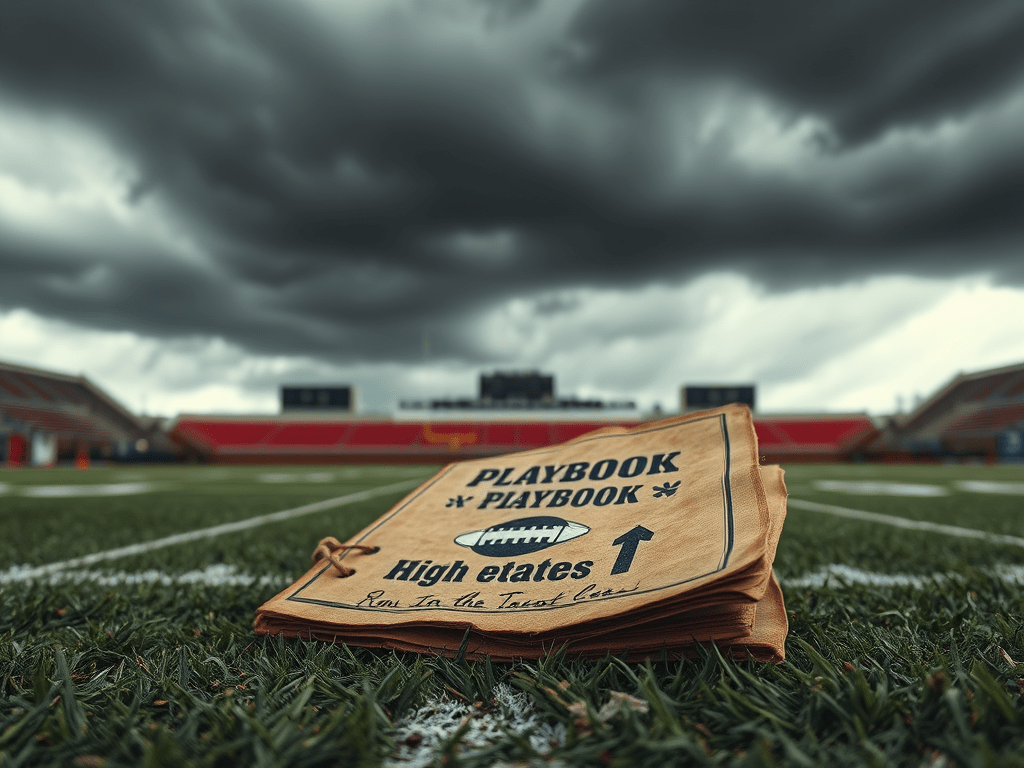
Owen McCown, a college quarterback at UTSA, was recently in the news and under scrutiny after admitting he received a copy of an opponent’s playbook from a disgruntled former Memphis Tigers player before their matchup last year.
UTSA won that game, 44–36.
A reporter from On3Sports—a college sports outlet that primarily covers Memphis and caters to its fan base—brought the story to light during American Athletic Conference media days. That detail may help explain why the story surfaced now, and why it’s generating so much heat in certain corners of the college football world.
It wasn’t stolen. He didn’t go looking for it. But he used it—and now people are asking: Was it cheating? Was it just gamesmanship? Or is it something murkier in between?
Ambivalence and a Reality Check
Let me be transparent: I’m ambivalent about this Owen McCown story.
Do I endorse cheating? Absolutely not. But do I believe this was some grand, orchestrated plan to gain an unfair advantage? No.
From everything we know, McCown didn’t go looking for the opposing playbook—it landed in his lap, courtesy of a player who had an axe to grind.
Did he handle it perfectly? No. But I’m also a little forgiving of a college-aged kid who reacted poorly to an unexpected gift.
And let’s not pretend gamesmanship hasn’t always been part of the equation in all levels of sports competition.
The New England Patriots covertly sent staff to other teams’ practices to film plays. The University of Michigan reportedly had a staffer dress in another school’s gear to blend in on the sideline and steal signs.
Baseball? Please. The entire sport is practically built on creative rule-bending—spitballs, mirrors in the outfield, hidden cameras, runners at second base signaling pitch calls.
Everyone wants the edge. Always has.
So while I’m not giving McCown a free pass, I’m also not joining the moral outrage choir. This is just another reminder that the difference between scandal and strategy often comes down to who got caught—and who had the louder microphone.
Not Just Any College Kid
Of course, there’s another wrinkle here that complicates my ambivalence.
Owen McCown isn’t just any college kid still figuring things out. He’s the son of longtime NFL quarterback Josh McCown—a guy who played for over a dozen pro teams, started in playoff games, and now coaches in the league. A couple of years ago, he was reportedly a hair’s breath away from being named the head coach of the Houston Texans.
That means Owen didn’t just grow up watching football… he grew up inside it. In film rooms. On sidelines. Around people who know the rules—and how to bend them.
So, while I’m still sympathetic to the idea that he didn’t go hunting for this information, I also can’t pretend he was completely naïve to what it represented. If anything, that background raises the bar for what we expect from someone in his position.
And it raises another uncomfortable question: if Owen did tell someone—his dad, a coach, a teammate—about the playbook before the game, then where does the responsibility really fall?
Because if we’re not expecting a 22-year-old college kid to be a pillar of ethics (and fair enough), then the adults around him—especially those who’ve spent their lives in this game—bear even more of the burden.
And if no one advised him to do the right thing? That’s not just a reflection on him. That’s a failure of leadership.
Which is exactly why this story doesn’t fit neatly into the usual boxes. It’s not just about right and wrong. It’s about influence, culture, and the shared silences that allow things like this to happen without ever feeling like a scandal until the spotlight hits.
We Love the Gray… Until It Works Against Us
There’s a tendency to talk about sports in black-and-white terms—fair and foul, win or lose, hero or villain. But let’s be honest: the real world doesn’t work that cleanly, and neither does college football.
Did the quarterback break a rule? No. Should he have self-reported? Probably. Is this the first time something like this has happened? Not even close.
This wasn’t a scheme. It wasn’t sign-stealing through elaborate tech or hacking a cloud account. It was a player using intel that fell into his lap—an edge handed over by someone who had a personal score to settle.
It wasn’t clean. But don’t act like the game itself ever really has been.
And let’s be honest: if the roles were reversed—if a disgruntled UTSA player had slipped the Roadrunners’ playbook to the Memphis quarterback—the outcome likely would’ve been the same. The outrage? Probably not. Because when it comes to sports, we usually don’t get mad about cheating until we’re not the ones benefiting from it.
Cheating vs. Gamesmanship: A Dirty Divide
We pretend there’s this clear moral boundary between “cheating” and “gamesmanship,” but they often occupy the same real estate. If you’re tipping pitches, is it cheating to pick up on the pattern? If you study a formation and predict the next call, is that unfair?
The difference is usually just who benefits.
Take the Houston Astros.
After their 2017 World Series win, they were ultimately accused of using technology to cheat their way to a championship. The backlash was swift and unforgiving. They never denied stealing signs during home games.
The defense—depending on who you ask—was that they were simply using technology in a way that was smarter (or sneakier) than their competitors.
The story and ensuing investigation only came about because a former player, pitcher Mike Fiers, broke an ‘unwritten rule’ of the game by talking about what was going on. But here’s the thing: If Mike Fiers had been a Yankee or a Dodger in 2017—and then got released the following year—this whole scandal might’ve looked very different.
Because then he would’ve been spilling their secrets instead. And the media storm wouldn’t have centered on Houston—it would’ve been swirling over New York or L.A.
The point? Most teams push the boundaries. Some are just better at covering it up. And once again, the difference between “cheating” and “strategy” comes down to who gets exposed… and by whom.
So, if you think the Astros were the only team playing dirty that year, you probably also think Santa checks every name on the list.
College Football Has Never Been Clean
People act shocked—shocked!—that a quarterback would use info that wasn’t earned through grind and grit. But this is the same system where coaches jump contracts, boosters whisper promises, and recruiting violations get swept under the rug until someone needs leverage.
Collegiate sports has been a business for decades. The only difference now is that more people are seeing how the sausage gets made.
So yes, the QB should’ve turned the playbook in. But save the pearl-clutching. This isn’t the fall of Camelot. It’s just the latest reminder that the idea of a pure game is more myth than memory.
Why the Story Lingers—Even After the Coaches Move On
According to a New York Times/The Athletic report, Owen McCown claims he didn’t even fully understand what he was looking at when he received the leaked playbook. UTSA’s head coach backed up McCown’s integrity publicly. And both coaching staffs agreed to move on—maybe because they know this kind of thing isn’t new.
Maybe because they recognize it’s not worth relitigating a game that’s already been played. Or maybe because, deep down, they know this isn’t the first time something like this has happened—and it won’t be the last.
And yet, the story still has legs. Why?
Because fans won’t move on. Especially the ones on the losing side.
This is where the 2017 Astros-Dodgers World Series comparison rings especially true. Even if you believe the Astros knew every pitch before it came—players still had to identify it, swing at it, and hit it. That takes talent. That takes execution. They didn’t get the answer key to a fifth-grade math test—they got a tip sheet on a graduate-level final. They still had to pass.
Players and coaches understand that. Even when they’re mad about being spied on or outmaneuvered, they know games are won with skill, not just secrets.
But fans? Fans want justice, or revenge, or someone to blame. And sometimes, the only thing more satisfying than winning is believing the loss wasn’t our fault.
Which brings us full circle. Maybe this story isn’t just about ethics in college football. Maybe it’s about the stories we cling to when our team doesn’t come out on top.
It’s a Dirty Game—Play Smart, Not Stupid
The quarterback didn’t cover himself in glory here, but he didn’t burn the rulebook either. He walked a moral tightrope and leaned the wrong way. It happens—more than we care to admit.
But maybe the real scandal isn’t that this happened.
Maybe it’s that anyone still believes college football was ever about clean lines and noble intentions.

Leave a comment