
By LONNIE KING | © 2025, Big Daddy’s Texas Sports
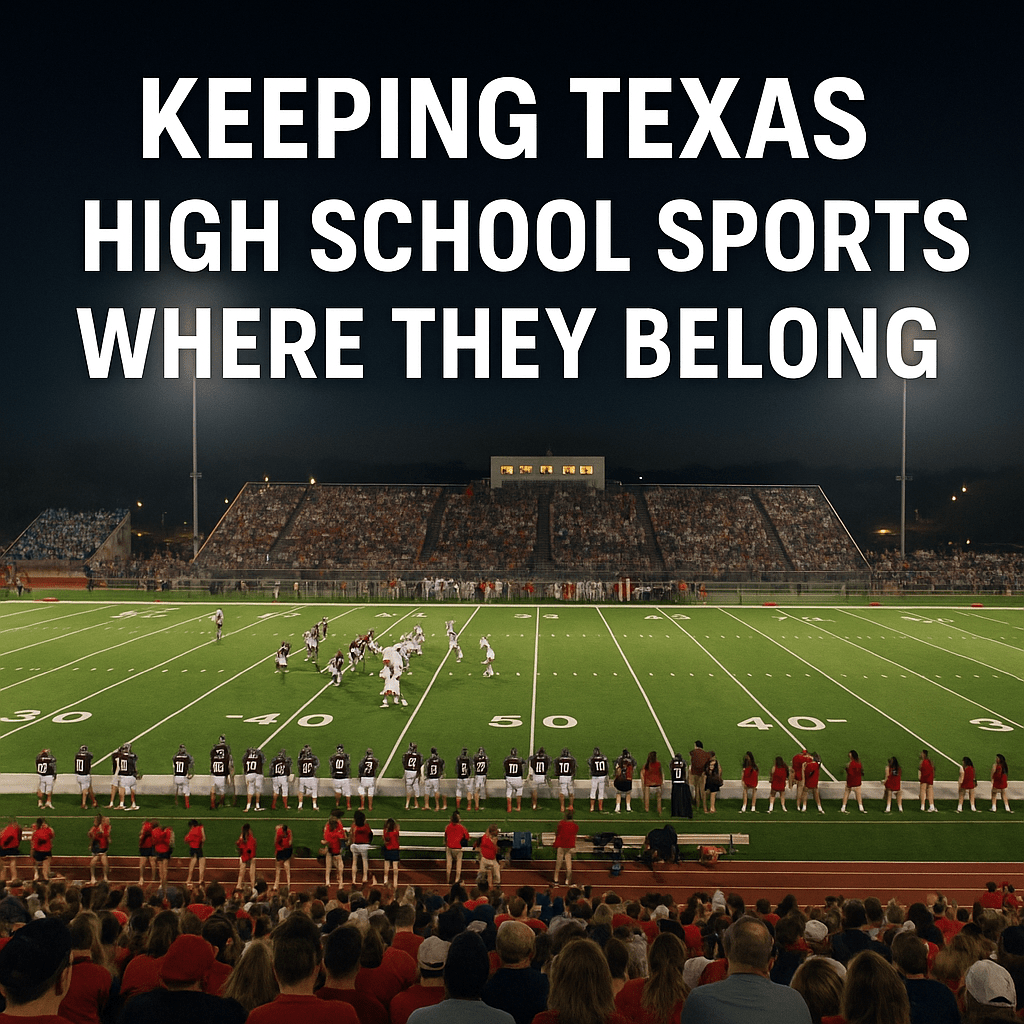
For as long as most of us can remember, Friday nights in Texas haven’t just been about football—they’ve been about community. The band marches, the cheerleaders rally, and the stands fill with neighbors who come together to celebrate more than a scoreboard. High school athletics in Texas are a tradition woven into the very fabric of our towns, cities, and schools.
I recently received a press release from the Texas High School Coaches Association announcing a joint commitment by several coaches organizations within the state in support of education-based athletics. And that is what prompted me to think about this topic and want to share some thoughts about it. I’m not surprised by the stand they’re taking, and to be honest, I hadn’t really thought much about how high school coaches feel about the subject, but I’m happy to know that we’re on the same wavelength.
Why the Stand Matters
Sports-centric academies are springing up across the country, promising athletes a fast track to stardom. But here’s the problem: those academies often reduce a young person’s life to a single, high-pressure pursuit.
The risks are real:
- Burnout—National studies show more than 30% of youth athletes report symptoms when pushed into year-round intensity.
- Injury—Specializing too early has been linked to overuse injuries and limits overall athletic development.
- Lost balance—Too often academics, mental health, and social growth get sidelined when winning becomes the only goal
Contrast that with Texas high school sports: nearly all coaches are certified teachers. That means they’re not just drawing up plays, they’re teaching life lessons. A recent study of 14,000 Texas athletes showed over 80% say lessons from athletics carry over into other parts of life. That’s the kind of impact that lasts longer than any stat line
A Cautionary Tale—And a Word About Parents
Long before IMG or today’s sports-only academies, we saw what can happen when a child’s whole identity is built around athletics.
Todd Marinovich, once a can’t-miss quarterback prospect at USC and a first-round NFL draft pick, was raised under the microscope of a father determined to engineer the “perfect” athlete. His diet, training, and schedule were controlled from the time he was a toddler.
For a while, it worked—he had success at the highest levels. But the cost was steep. Stripped of balance and normal childhood experiences, Marinovich spiraled into substance abuse, struggled with mental health, and saw his career collapse almost as quickly as it began.
The hopeful part is that Marinovich is still alive, and in recent years he has begun to reclaim his story. He recently released his memoir reflecting on his upbringing and recovery.
Today, he lives in Hawaii, finds healing in art, and takes pride in watching his own son enjoy football without the suffocating pressures he endured. His story reminds us that athletic success at all costs is no success at all—and that what young athletes need most is balance, education, and community.
And here’s where I want to be clear: I don’t believe most parents who put their kids into sports academies are villains. Many of them are motivated by love and hope, not ego.
Some genuinely believe athletics could be their child’s best shot at breaking free from poverty or creating a path to college that might otherwise feel out of reach. Others may see their child’s athletic gifts as a rare chance to build a future that isn’t easily available through other means.
In that sense, academies aren’t always about stage-parenting or chasing bragging rights—they can just as easily be a symptom of our culture. When society dangles athletic fame and financial security as golden tickets, it’s not surprising that some families reach for whatever looks like a shortcut.
The problem isn’t the motive—it’s the system that convinces people the only way to succeed is to mortgage balance, education, and well-being for a slim shot at glory.
Beyond the Paycheck
I’m extremely happy when I see someone benefit personally and financially from athletic success. It’s why I don’t begrudge college kids their NIL deals, and it’s why I don’t gripe about professionals signing multimillion-dollar contracts with billionaire owners.
If athletes’ talents can line the pockets of billionaires, I fully support them getting as much of a chunk of that pocket lining as they can.
Still, the truth is an athletic career is often very short. Even the longest of them is generally over by a person’s 35th birthday. And it takes more than millions of dollars to survive for the 40 or 50 years that follow.
What it takes is education, character, adaptability, and a sense of purpose beyond the playing field. Those are the things that sustain a person when the cheering stops.
That is where I fear sports-based academies can come up short. They can prepare a kid for the first 10 years of adulthood, but not the last 50.

More Than a Game
When you walk into a Texas high school gym, stadium, or ballfield, you see more than athletes chasing dreams. You see kids learning how to lead, how to work with others, and how to bounce back from setbacks. You see multi-sport athletes gaining versatility, pep rallies that build school spirit, and friendships formed in locker rooms that outlast graduation.
The THSCA put it best: Texas already has the model that works. It’s safe, proven, and built to last
Why I Support Education-Based Athletics
I’ll be honest—I’m not a fan of these sports-only academies. They may shine in the short term, but they strip away the very qualities that make Texas athletics unique. They risk turning athletes into commodities instead of shaping them into well-rounded young adults.
Only a fraction of athletes will go on to play in college. Fewer still will ever earn a paycheck for their sport. But every single athlete will face life beyond the playing field.
Our public schools—anchored in community, led by teacher-coaches, and supported by generations of Texans—prepare them for that life.
And that’s why the value I see in high school athletics is also part of the reason I worry about the current state of public education in Texas.
When it feels like our state leaders are intent on dismantling or defunding the system, I can’t help but think of everything that could be lost—not just in classrooms, but in gyms, stadiums, and practice fields where so much growth and learning take place.
That’s why I stand with the coaches and associations taking this stand. High school sports in Texas aren’t just about winning games. They’re about shaping lives.

Leave a comment