
By LONNIE KING | © 2025, Big Daddy’s Texas Sports
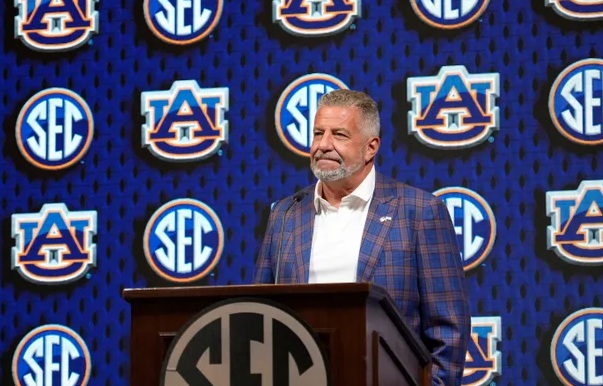
Bruce Pearl has just announced his retirement from coaching college basketball. Do you stop to ask yourself how that makes you feel? I’ve noticed several people who apparently have and the reactions are mixed.
How we answer may expose more about us than about him.
Are we old enough — or, more precisely, focused enough — to remember the past transgressions that cost him previous coaching jobs? Do we only celebrate the gregarious, media-savvy coaching vet we’ve grown to love in recent years? Or do we sit in the tension between both versions of the man?
Whatever our reaction, it probably says as much about us as it does about him.
A Familiar Story in Houston
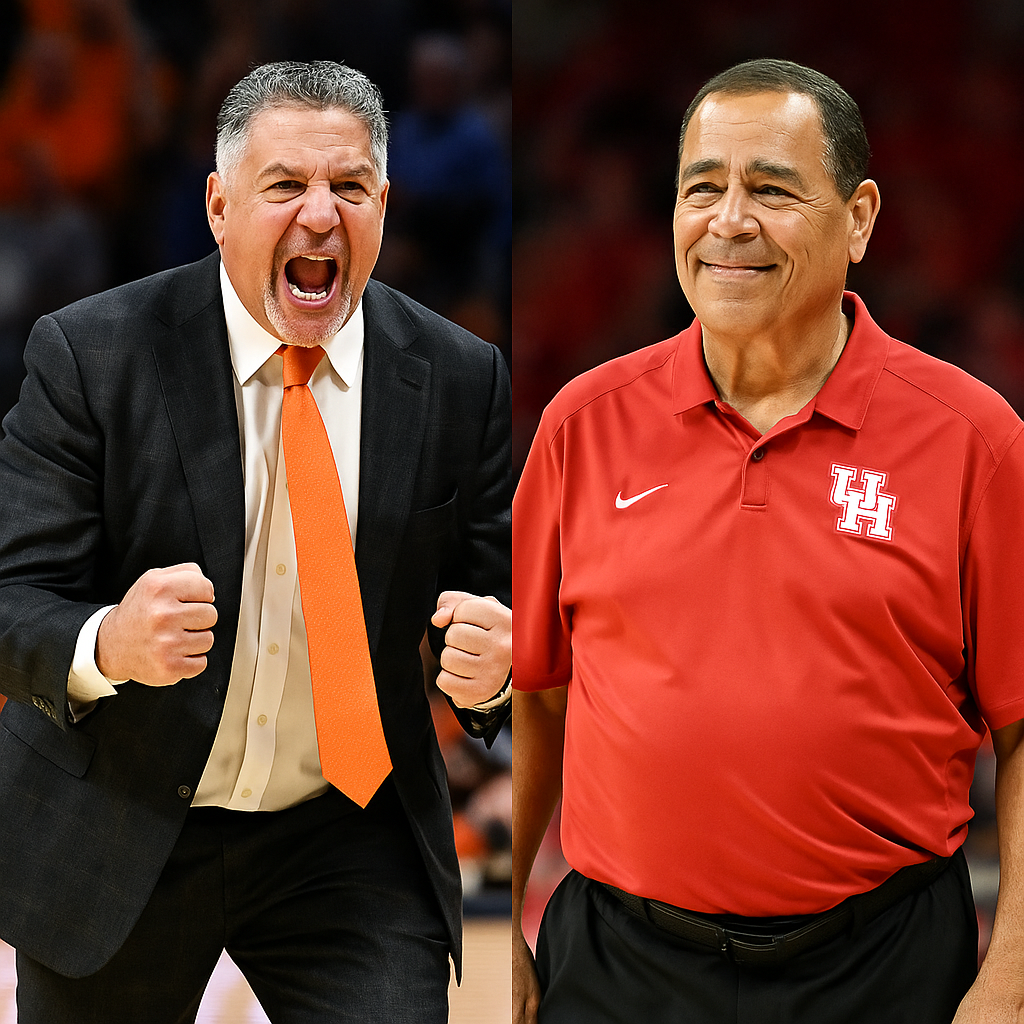
Pearl’s arc is hardly unique. Here in Texas, we’ve watched Kelvin Sampson walk a similar road.
Years ago, he was fired at Oklahoma for NCAA violations. Fired again at Indiana, then slapped with a five-year show-cause penalty that effectively pushed him out of college basketball.
Even though he moved on to the NBA as an assistant coach with the Houston Rockets, for a while, it looked like his head coaching career in the collegiate ranks was over.
And yet, Houston gave him another chance. And now, a decade later, Cougar basketball is relevant again — Final Four runs, a packed Fertitta Center, and a coach who’s as respected in this city as any voice in sports.
Fandom Is Situational
Still, largely dependent on your personal perspective or which school or schools you root for, your opinions on either man — and your reactions to the things they do — may be extremely positive…or extremely negative.
I think that’s because, for fans, the tension isn’t just about loving redemption arcs or wanting to believe people can grow. It’s also situational — and relative to personal benefit.
If a coach is going to help my school, then sure, let’s forgive, forget, and celebrate his second act. If he’s reviving a bitter rival, then suddenly his sins matter again. And if his perceived transgressions harmed my school in the past, he is beyond forgiveness.
That’s not principle; that’s just fandom in its rawest form.
What the “Misconduct” Really Was
One reason fans wrestle with these legacies is that “misconduct” often gets mentioned vaguely, as if the word itself should carry all the weight. But the specifics matter.
- Bruce Pearl at Tennessee: His downfall started with a cookout. In 2008, Pearl hosted recruit Aaron Craft and his family at his home, which was a violation of NCAA rules about unofficial visits. On its own, that’s the kind of minor contact the NCAA used to obsess over. What escalated it into a career-defining scandal was the cover-up: Pearl reportedly misled investigators and encouraged staff to do the same. The NCAA doesn’t just punish the act — it punishes the lie. Pearl was hit with a three-year show-cause penalty, and Tennessee eventually fired him.
- Kelvin Sampson at Oklahoma and Indiana: Sampson’s trouble revolved around phone calls. At Oklahoma, he and his staff made hundreds of impermissible calls to recruits — far beyond what the rules allowed. At Indiana, already under NCAA restrictions, he kept making calls anyway. Worse, in the eyes of the NCAA, he was found to have misrepresented the extent of his involvement. That led to five “major” violations, his resignation in 2008, and a five-year show-cause order that nearly ended his college career.
The pattern is clear: the acts themselves — a cookout, too many phone calls — look almost comical in hindsight. What turned them into career-stopping scandals was the NCAA attaching the labels of lying and unethical conduct.
And, right or wrong, those men both wore those labels for long stretches of time.
Were the Rules the Real Problem?
But let’s be honest: the NCAA’s old rulebook was such a bizarre, antiquated mess that violations often felt laughable. Sometimes we’d shake our heads in disbelief that such things could even be considered violations.
Other times, we’d smirk at the absurdity of grown men in suits pretending that a slice of pizza or an extra phone call threatened the integrity of college basketball.
So when someone like Pearl or Sampson got nailed, a lot of fans weren’t necessarily outraged at the act itself — just at the timing, or at who was hurt or benefitted from the enforcement.
Not Everyone’s Clapping
And because some feelings die hard, it doesn’t shock me that since Pearl’s announcement, not all the reaction has been celebratory. Some voices — especially on social media — have been quick to remind everyone of the past.

They point back to the NCAA violations at Tennessee, the lying that cost him his job, and the sanctions that followed him into Auburn.
For those critics, the retirement tour isn’t about honoring a lovable, animated coach on the sideline. It’s about making sure we don’t whitewash the choices that landed him in trouble in the first place.
And honestly, that pushback may or may not be fair.
On one hand, we can’t demand accountability one day and then brush it aside the next just because a coach smiles for the cameras or wins a few big games. On the other hand, we’re finally realizing how ridiculous some of those rules were.
Either way, the critics serve as a reminder that not everyone views Pearl’s story as redemptive — and that our fandom bias sometimes blinds us to how differently others see the same man.
Standards That Don’t Even Stand Still
But here’s the other side: the NCAA itself no longer seems to hold people to the same standards it once enforced so harshly. The landscape has shifted so dramatically with NIL deals and looser recruiting rules that many of the “major violations” of the past now look almost comical in hindsight. Coaches who were vilified for extra phone calls, small gifts, or helping athletes get connected to opportunities might not even raise an eyebrow today.
Paying athletes ‘under the table’ was so commonplace that it became necessary to ‘legalize’ it in college sports in order to try to make the practice more equitable for more athletes.
So when we talk about Pearl or Sampson and their transgressions, we also have to ask: were they truly unethical, or were they just caught in the crossfire of a governing body clinging to outdated notions of “amateurism”?
Maybe the bigger indictment isn’t on the coaches at all, but on a system that punished some actions one decade and profits off of them the next.
Why I Lean Toward Sympathy
That’s why I lean toward sympathy for both men. Maybe they weren’t perfect, but neither was the system that punished them. And in the years since, both proved they could lead programs, energize fan bases, and do far more good than harm.
Pearl turned Auburn into a basketball school in a football state. Sampson gave Houston its hoops identity back. Those aren’t small feats.
The Legacy I’ll Remember
So yes, I won’t forget the sanctions and the suspensions. But I’ll also remember the joy of seeing Auburn storm to a Final Four. I’ll remember walking into Fertitta Center and feeling the buzz of Cougar basketball like it was the Guy Lewis era all over again.
Lasting legacies are often cemented in second chances. What if Norman Dale hadn’t gotten his second chance in the movie Hoosiers? None of us would be better off.
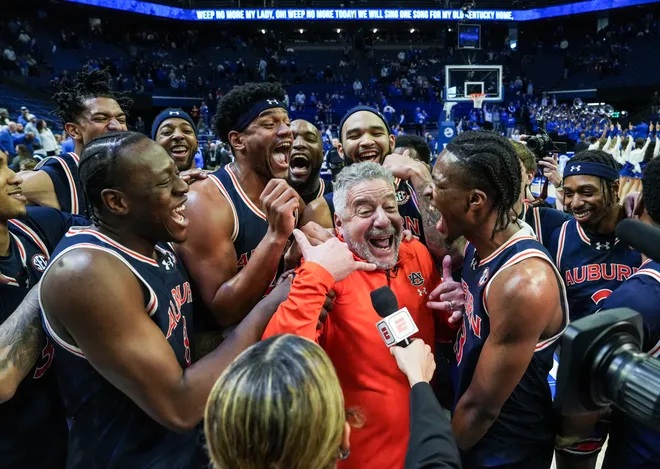
In the end, redemption stories may be messy, but they’re also part of what makes sports worth watching. Because being a fan doesn’t mean being blind. But it does mean leaving room for the idea that people — and programs — can write new chapters that are worth celebrating.

Leave a comment